
Listen to this article
David and Goliath Bible Story: Meaning, Lessons, and Discussion Questions
The David and Goliath Bible story in 1 Samuel 17 tells how God delivered Israel through David, a young shepherd who trusted the Lord when others were afraid. This story is not mainly about believing in yourself or defeating every personal obstacle by human effort. It is about the living God who saves, strengthens faith, and uses unlikely servants for His purposes. For parents, teachers, children, and small groups, David and Goliath offers a powerful lesson in courage rooted in trust, not pride.
Key takeaways
- The main lesson of David and Goliath is that God delivers His people and is greater than any enemy.
- David’s courage came from trust in the Lord, not confidence in his own strength or weapons.
- Goliath mocked Israel, but David understood that the battle belonged to God.
- The story teaches children and adults to face fear with prayerful faith, wise action, and dependence on God.
- David’s victory points forward to God’s pattern of saving through unexpected and humble servants.
Where the David and Goliath Story Is Found
The David and Goliath Bible story is found in 1 Samuel 17. The scene takes place during a conflict between Israel and the Philistines. The Philistine champion, Goliath, came out day after day to challenge Israel’s army. Saul and the soldiers were terrified because Goliath was large, experienced, heavily armed, and openly defiant. David, the youngest son of Jesse, arrived at the battlefield to bring food to his brothers. Unlike the soldiers who saw only the size of the giant, David saw that Goliath was challenging the armies of the living God.
1 Samuel 17 Explained: What Happens in the Story
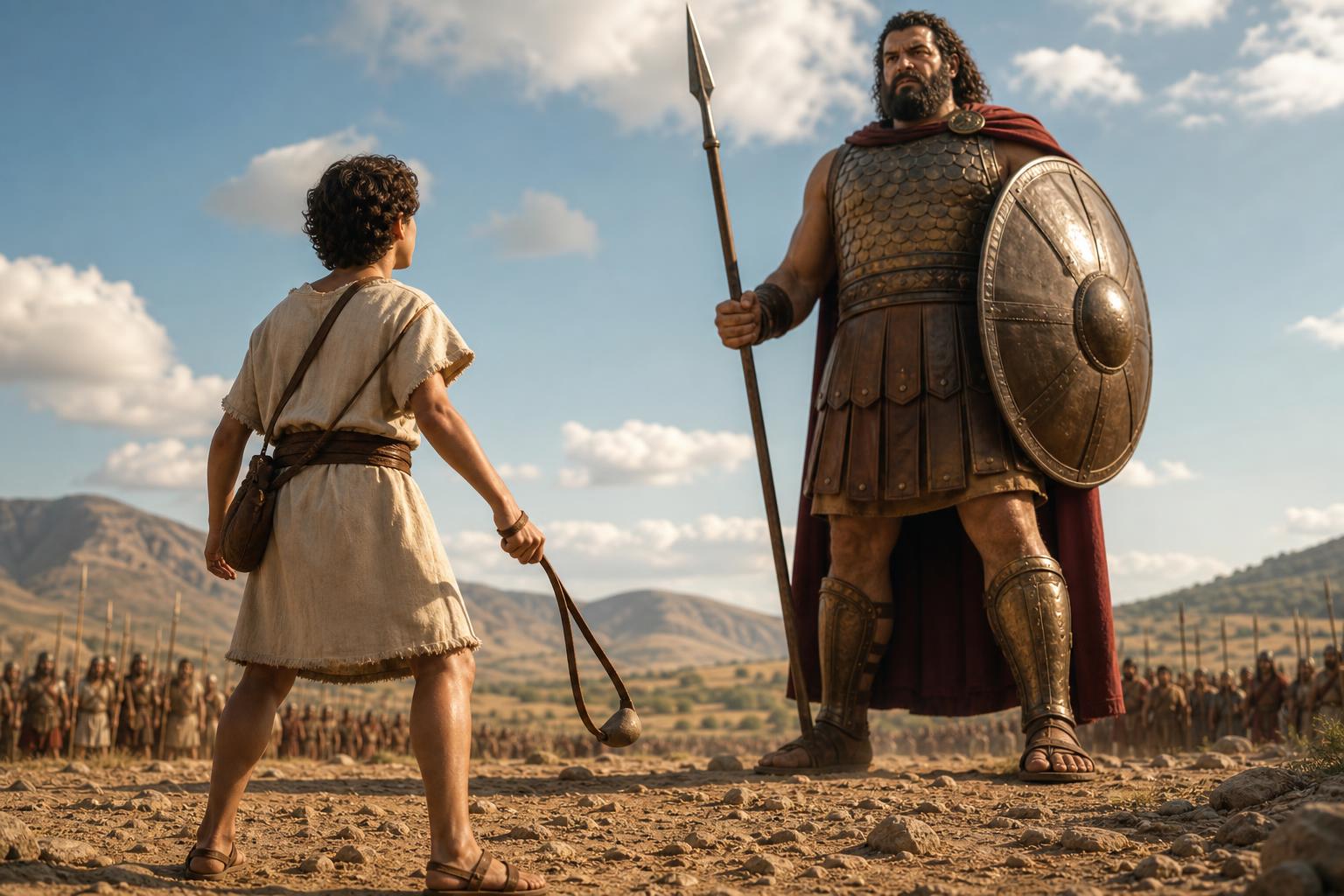
Goliath challenged Israel to send one fighter against him. If Israel’s fighter won, the Philistines would serve Israel; if Goliath won, Israel would serve the Philistines. No one volunteered. David heard Goliath’s taunts and asked why this uncircumcised Philistine should defy the armies of the living God. When King Saul questioned David’s ability, David remembered how the Lord had helped him protect his sheep from a lion and a bear. David refused Saul’s armor because he was not used to it. Instead, he took his staff, five smooth stones, and a sling. David told Goliath, “The battle is the Lord’s” (1 Samuel 17:47). With one stone, David struck Goliath, and God gave Israel victory.
David and Goliath Meaning: More Than Self-Confidence
A common modern retelling turns David and Goliath into a simple message: “Believe in yourself and you can beat your giants.” While the story does show courage, that is not its deepest meaning. David’s confidence was not self-centered; it was God-centered. He trusted the Lord who had already shown faithfulness in his life. Goliath trusted in size, armor, and weapons. David trusted in the name of the Lord of hosts (1 Samuel 17:45). The meaning of the story is that God is able to save and defend His people, even through someone who appears weak or unlikely.
Bible Story About Courage and Faith
David’s courage was not the absence of danger. Goliath was a real threat, and David was not pretending the battle was easy. Biblical courage means acting faithfully because God is trustworthy. David remembered God’s past help, spoke truth about God’s power, and stepped forward in obedience. This makes the story especially useful for children and families. Kids can learn that courage is not bragging, showing off, or taking foolish risks. Courage means doing what is right while depending on God, asking for help, and remembering that the Lord is near.
David and Goliath for Kids: Age-Appropriate Lessons
When teaching David and Goliath to children, keep the focus on God’s deliverance rather than violence or personal glory. Younger children can understand that David trusted God when he was afraid and that God helped His people. Older children can discuss fear, bullying, obedience, and using the gifts God has given them. Avoid suggesting that children should face dangerous situations alone. A faithful application is: “Trust God, do what is right, and seek help from wise adults.” This keeps the lesson biblical, practical, and safe.
Practical Lessons from David and Goliath
First, God is greater than what frightens us. Israel saw Goliath as unbeatable, but David saw God as greater. Second, remembering God’s past faithfulness strengthens present courage. David remembered the lion and the bear before facing Goliath. Third, God can use ordinary people. David was young, overlooked, and not dressed like a soldier, yet God worked through him. Fourth, faith acts wisely. David did not copy Saul’s armor; he used the tools he knew. Fifth, the glory belongs to God. David wanted all the earth to know that there is a God in Israel (1 Samuel 17:46).
Discussion Questions for Families, Classrooms, and Small Groups
Use these David and Goliath discussion questions after reading 1 Samuel 17: What made the Israelite army afraid? What did David believe about God that others seemed to forget? Why did David refuse Saul’s armor? What does “the battle is the Lord’s” mean? How is David’s courage different from showing off? What fears do people your age face today? How can remembering God’s faithfulness help us when we are afraid? Who are trusted people God has placed in your life to help you make wise choices?
FAQs
What is the main lesson of the David and Goliath Bible story?
The main lesson is that God delivers His people and is greater than any enemy. David’s courage came from trusting the Lord, not from self-confidence alone.
How can I explain David and Goliath to kids?
Explain that David was a young shepherd who trusted God when others were afraid. Emphasize that God helped His people and that children can pray, do what is right, and seek help from trusted adults when they face fear.
Is David and Goliath only a story about overcoming personal problems?
No. While the story can encourage believers facing fear, its first meaning is about God’s deliverance of Israel and David’s faith in the living God. Applications should flow from that biblical context.
Go deeper in study
Use FaithPath resources for Bible study, reflection, and small-group discussion.

Leave a Reply