
Listen to this article
The Parable of the Prodigal Son Explained for Families and Small Groups
The parable of the prodigal son explained in Luke 15:11-32 shows the generous love of a father, the repentance of a lost son, and the danger of a resentful heart in the older brother. Jesus told this story in response to religious leaders who criticized Him for welcoming sinners. For families, Sunday school classes, and small groups, the parable offers a powerful way to talk about confession, forgiveness, grace, restoration, and the joy God has when the lost return home.
Key takeaways
- The prodigal son represents a person who turns away, wastes what has been given, and then comes to repentance.
- The father’s welcome shows God’s compassionate love, readiness to forgive, and joy over restoration.
- The older brother warns against self-righteousness, resentment, and refusing to rejoice when others receive mercy.
- Luke 15 connects this parable with the lost sheep and lost coin, emphasizing God’s joy when the lost are found.
- Families and small groups can use this passage to discuss repentance, forgiveness, reconciliation, and how grace changes relationships.
Where the Parable Fits in Luke 15
Luke 15 begins with tax collectors and sinners drawing near to hear Jesus, while the Pharisees and scribes complain, “This man receives sinners and eats with them” (Luke 15:2). Jesus responds with three connected parables: the lost sheep, the lost coin, and the lost son. Each story highlights something lost, a joyful recovery, and a celebration. The prodigal son, also called the parable of the lost son, is the longest and most detailed of the three. It shows not only the return of the lost but also the heart of those who struggle to celebrate grace. This context matters: Jesus is explaining why He welcomes sinners and why heaven rejoices over repentance.
Summary of the Story in Luke 15:11-32
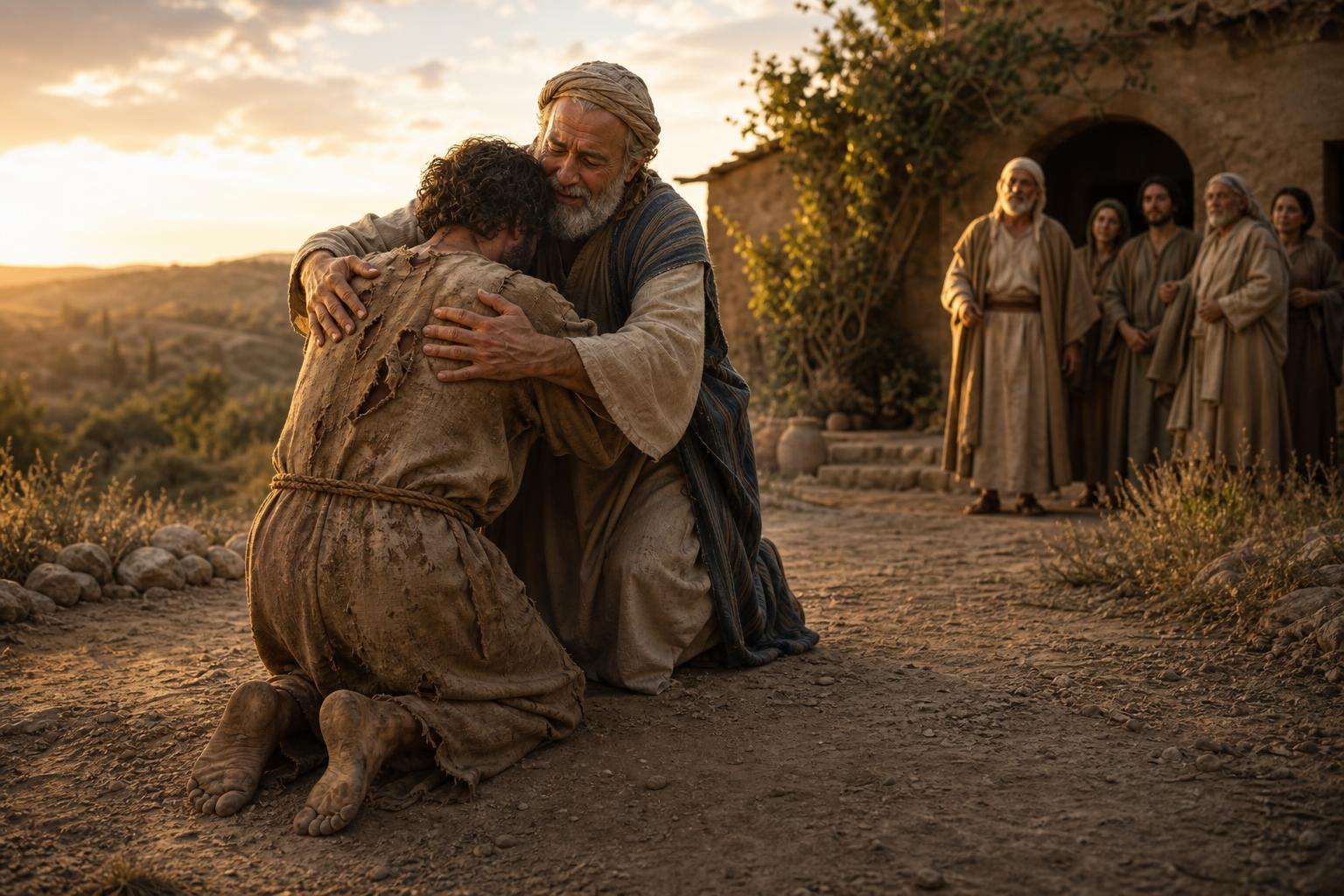
A younger son asks his father for his share of the inheritance, an action that would have been deeply dishonoring in Jesus’ cultural setting. He leaves home, wastes his wealth in reckless living, and eventually becomes desperate during a famine. While feeding pigs, he realizes his father’s hired servants live better than he does. He decides to return home, confessing, “Father, I have sinned against heaven and before you” (Luke 15:18). Before he can finish his prepared speech, the father runs to him, embraces him, and restores him with a robe, ring, sandals, and a feast. Meanwhile, the older brother becomes angry and refuses to join the celebration. The father lovingly appeals to him, reminding him that the lost brother has come home.
What the Prodigal Son Means
The phrase “prodigal son” usually refers to the younger son because he wastes his inheritance, but the parable is about more than bad choices. It is about repentance and restoration. The younger son’s turning point begins when “he came to himself” (Luke 15:17). He recognizes his sin, returns to the father, and confesses. The father’s response is not cold punishment but joyful welcome. This does not mean sin is harmless; the son experiences real consequences. But the main focus is the father’s mercy. For Christian teaching, the parable points to God’s gracious welcome of repentant sinners. Different Christian traditions may explain repentance, grace, and reconciliation with varying theological emphasis, but most agree that Jesus is showing the Father’s compassion toward those who return to Him.
The Father’s Love and Forgiveness
The father is the emotional center of the parable. He sees the son while he is still far away, feels compassion, runs, embraces him, and kisses him (Luke 15:20). In the story’s cultural setting, the father’s running would have been surprising and humbling. He does not wait for the son to prove himself worthy before showing love. The robe, ring, and sandals suggest restored relationship and dignity. Forgiveness in the prodigal son is not portrayed as reluctant; it overflows in celebration. This makes the parable especially meaningful for families and small groups discussing guilt, shame, and the fear that God will not receive us. Jesus presents the Father as merciful, attentive, and eager to restore.
The Older Brother’s Warning
The older brother’s response is one of the most important parts of the parable. He has remained at home and served the father, but his heart is distant. He refuses to enter the celebration and describes his service in terms of obligation rather than love. He resents mercy shown to his younger brother. The father gently reminds him, “Son, you are always with me, and all that is mine is yours” (Luke 15:31). The parable ends without telling us whether the older brother joins the feast. This open ending invites listeners, especially the religious leaders in Luke 15, to examine their own hearts. Do we rejoice when sinners repent, or do we resent grace when it is given to someone else?
How to Explain the Parable of the Lost Son for Kids
For children, explain the story with simple themes: the younger son made wrong choices, the father still loved him, the son came home and said sorry, and the father celebrated because his son was found. Avoid making the story only about “being naughty and saying sorry.” Help children see that God’s love is bigger than our failures and that forgiveness leads to restored relationship. A family discussion might ask: What did the son do when he realized he was wrong? How did the father show love? How can we forgive someone at home? For younger kids, the image of coming home is especially helpful: God welcomes us when we turn back to Him.
Small-Group and Sermon Discussion Questions
Use these prodigal son Bible study questions for a family devotion, Sunday school class, or sermon discussion group: 1. Why do you think Jesus told this parable after people criticized Him for eating with sinners? 2. What does the younger son’s request reveal about his heart? 3. What signs of repentance do you see in Luke 15:17-21? 4. What surprises you about the father’s response? 5. How does the older brother misunderstand both his father and his brother? 6. Where do you see yourself in the story: younger son, older brother, servant, or invited guest? 7. What does this parable teach about forgiveness and reconciliation? 8. How can a church community reflect the father’s joy when people return to God? 9. What boundaries or wisdom might still be needed when reconciliation involves serious harm? 10. How can your family or group practice grace without minimizing sin?
Practical Applications for Families and Churches
This parable can shape everyday discipleship. Families can use it to teach confession, forgiveness, and the difference between consequences and rejection. Small groups can use it to talk honestly about shame, resentment, and spiritual pride. Church leaders can use it to remind congregations that the gospel calls people home and calls the community to rejoice. In pastoral care, it is wise to distinguish forgiveness from instantly restoring every role or relationship without discernment, especially in situations involving abuse, betrayal, or ongoing harm. Still, the heart of the parable remains clear: the Father delights to receive the repentant, and His people are invited to share His joy.
FAQs
What is the main message of the parable of the prodigal son?
The main message is that God joyfully welcomes repentant sinners and calls His people to rejoice in grace. The story also warns against both open rebellion, represented by the younger son, and resentful self-righteousness, represented by the older brother.
Is the parable of the prodigal son mainly about repentance or grace?
It includes both. The younger son returns in repentance, and the father responds with generous grace. Christian traditions may describe the relationship between repentance, grace, and restoration differently, but the passage clearly emphasizes the father’s mercy and joy when the lost son comes home.
How can I teach the prodigal son to kids?
Keep the explanation simple: the son made sinful choices, became lost and needy, returned home, and was welcomed by his loving father. Ask children what it means to say sorry, forgive, and celebrate when someone comes back to God.
Go deeper in study
Use Share Scriptures resources for Bible study, reflection, and small-group discussion on the parables of Jesus.
Related guides
- Parable of the good samaritan explained
- Good Samaritan parable meaning
- Best Bible study methods for small groups
- Best Bible study topics for small groups
- Small group discussion questions for any Bible passage
- Bible study topics for small groups
- Sermon on the Mount explained
- How to lead a small group Bible study

Leave a Reply